
King Shocks Tuning: Compression, Rebound, and Reservoir Placement Explained
How internal shim stacks, high-pressure nitrogen gas, and external clickers work together to give your 4x4 world-class ride control.
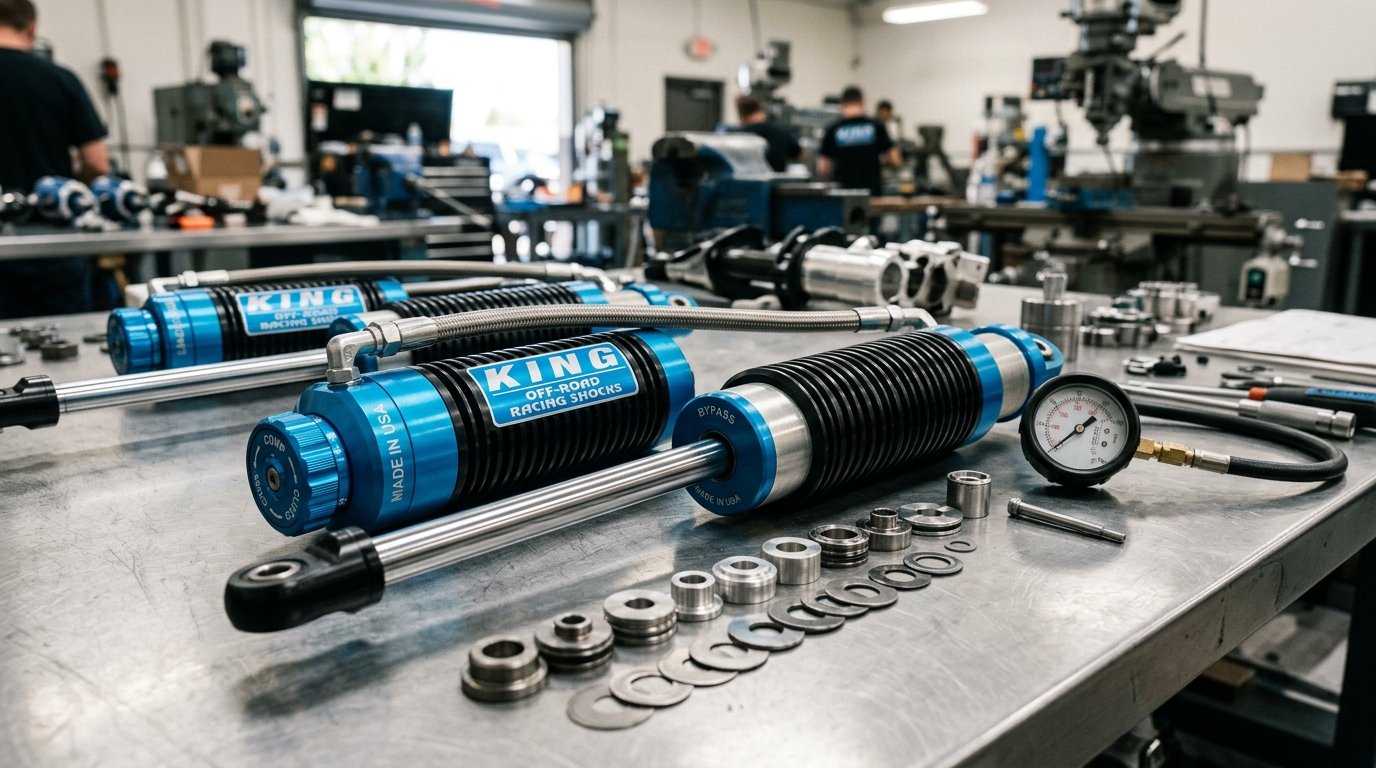
The Anatomy of an Off-Road Race Shock
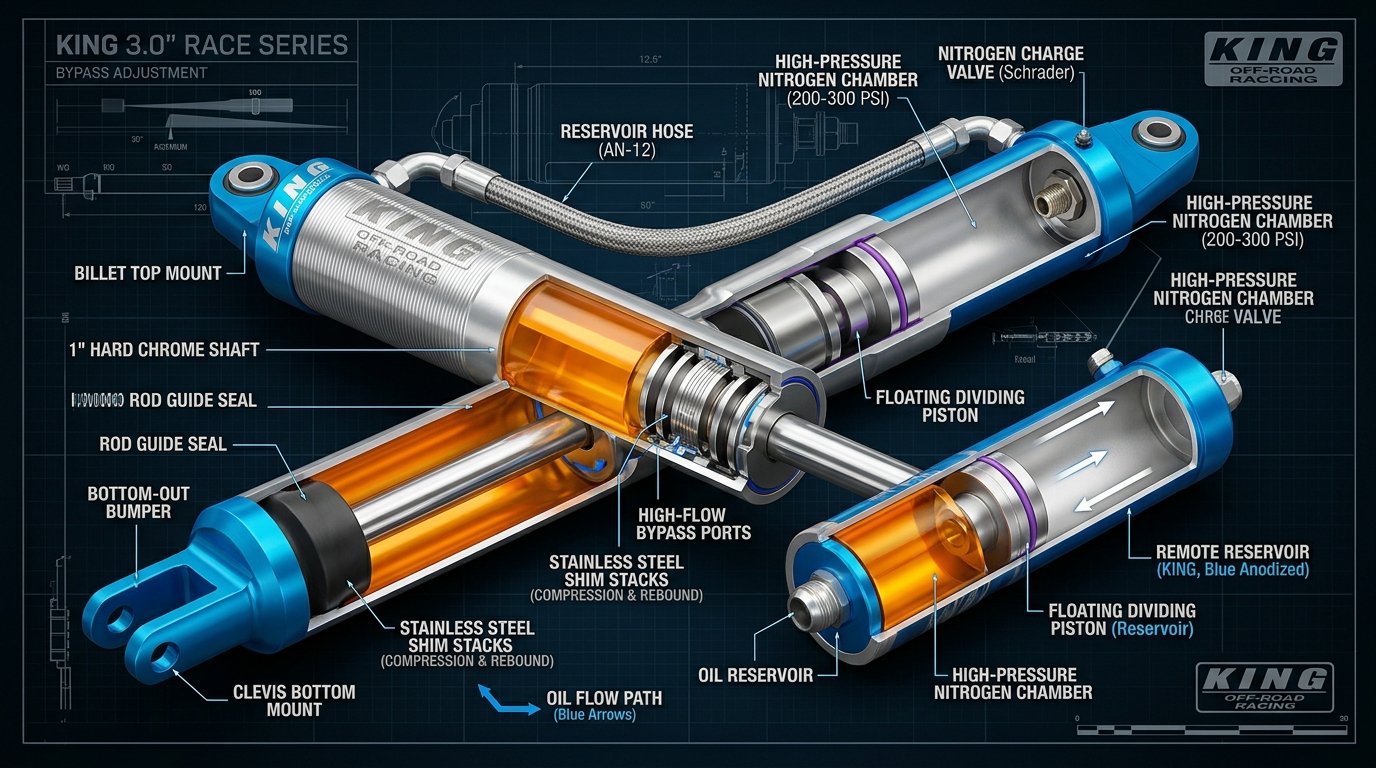
Unlike standard twin-tube shock absorbers, King Shocks operate on a monotube high-pressure nitrogen design. Inside, a floating piston separates pure nitrogen gas (charged to 200–250 PSI) from aerospace-grade synthetic shock fluid.
Shim Stack Valving: Tuning for Sand vs Rock
The speed at which the shock shaft moves is governed by thin stainless steel spring steel discs known as shims. At Panhard, we disassemble the shock body and configure the shim pyramid specifically for high-speed desert conditions: soft low-speed compression for road suppleness, progressing into firm high-speed resistance to cushion hard dune impacts.
External Reservoirs & Compression Adjusters
Remote finned reservoirs expand fluid capacity significantly, keeping shock oil temperatures cool under Qatar's summer desert conditions. Combined with 20-position compression adjuster knobs, drivers can fine-tune ride firmness from smooth highway cruising to stiff, bottom-out resistant dune riding in seconds.
Have a technical question about this topic?
Consult directly with Panhard specialists on WhatsApp.
Inquire on WhatsAppRelated Articles:

Suspension Setup for Land Cruiser LC300 in Qatar Desert Conditions
An in-depth technical analysis of spring rates, damping curves, and upper control arm geometry required for the Toyota LC300 over severe sand dunes.
Read Article