
Suspension Setup for Land Cruiser LC300 in Qatar Desert Conditions
An in-depth technical analysis of spring rates, damping curves, and upper control arm geometry required for the Toyota LC300 over severe sand dunes.

Understanding the LC300 Chassis Dynamics
The Toyota Land Cruiser LC300 arrived with significant weight reductions and a lower center of gravity compared to its predecessor. However, for enthusiastic drivers tackling Qatar’s sweeping dunes at Sealine and Khor Al Adaid, the factory suspension presents a noticeable challenge: forward pitch and nose-diving under abrupt braking, combined with restricted front wheel travel.
The Role of Compression Valving in Deep Sand
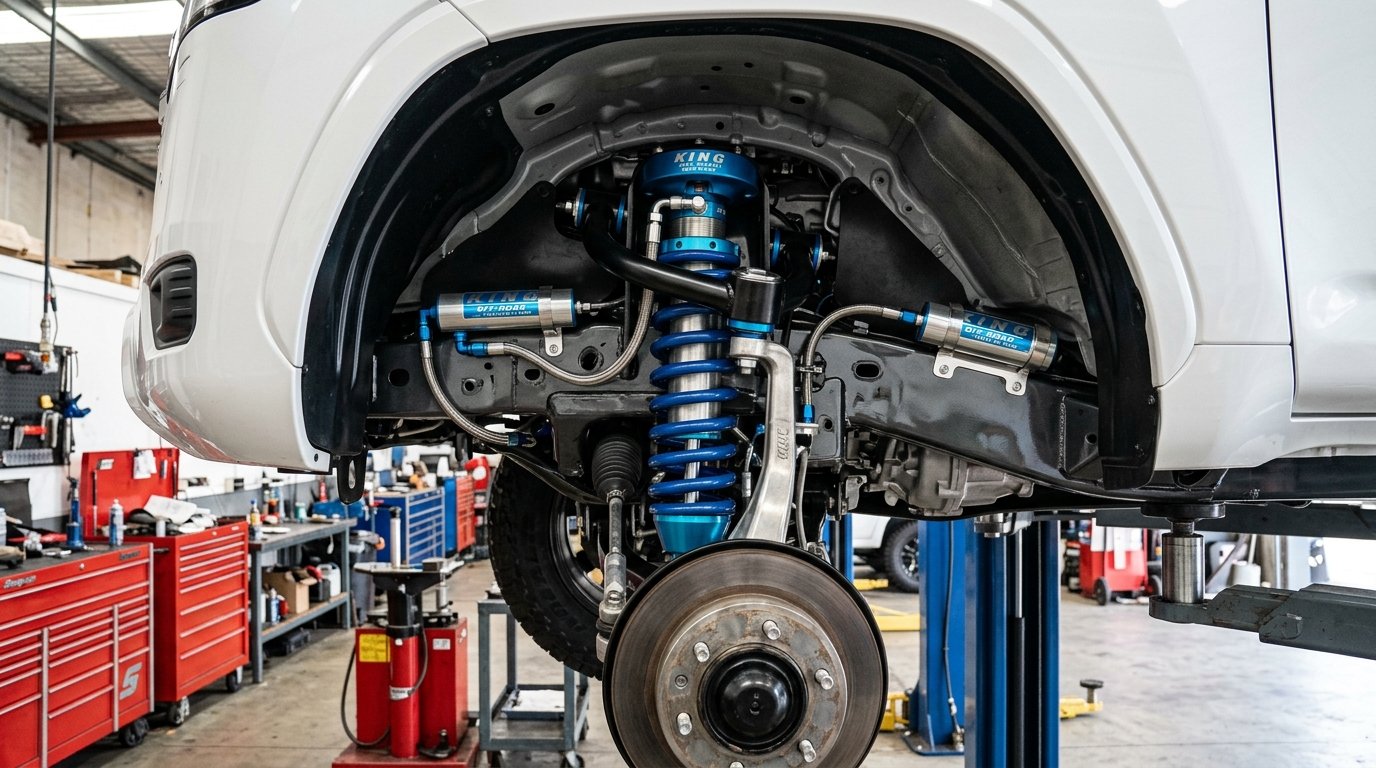
When running through deep, soft sand at high velocities, standard dampers overheat within 15–20 minutes. The hydraulic oil cavitates, losing its damping resistance. High-performance King Shocks 2.5 and 3.0 coilovers with remote finned reservoirs dissipate heat rapidly, ensuring the vehicle remains composed across multiple consecutive dune crests.
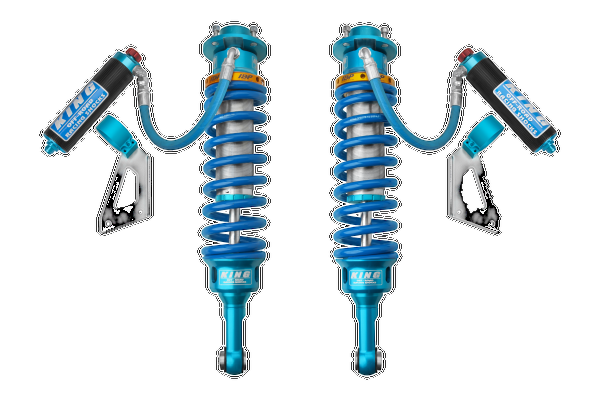
King 3.0 Front Coilover
Internal bypass option, remote reservoir, custom valving for high-speed desert dunes.
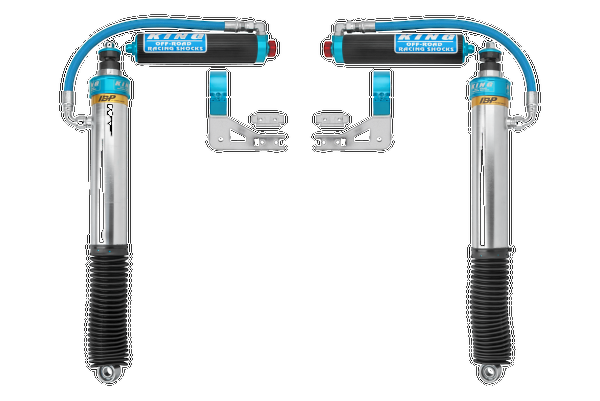
King 3.0 IBP Rear Shock
Internal Bypass technology providing progressive resistance to prevent bottoming out.
Why Aftermarket Upper Control Arms are Essential
Lifting the LC300 by 2.0 to 2.5 inches reduces positive caster angle. Installing heavy-duty forged upper control arms restores caster to +4.0 degrees, delivering highway steering stability and preventing premature tire edge scuffing.
Have a technical question about this topic?
Consult directly with Panhard specialists on WhatsApp.
Inquire on WhatsAppRelated Articles:
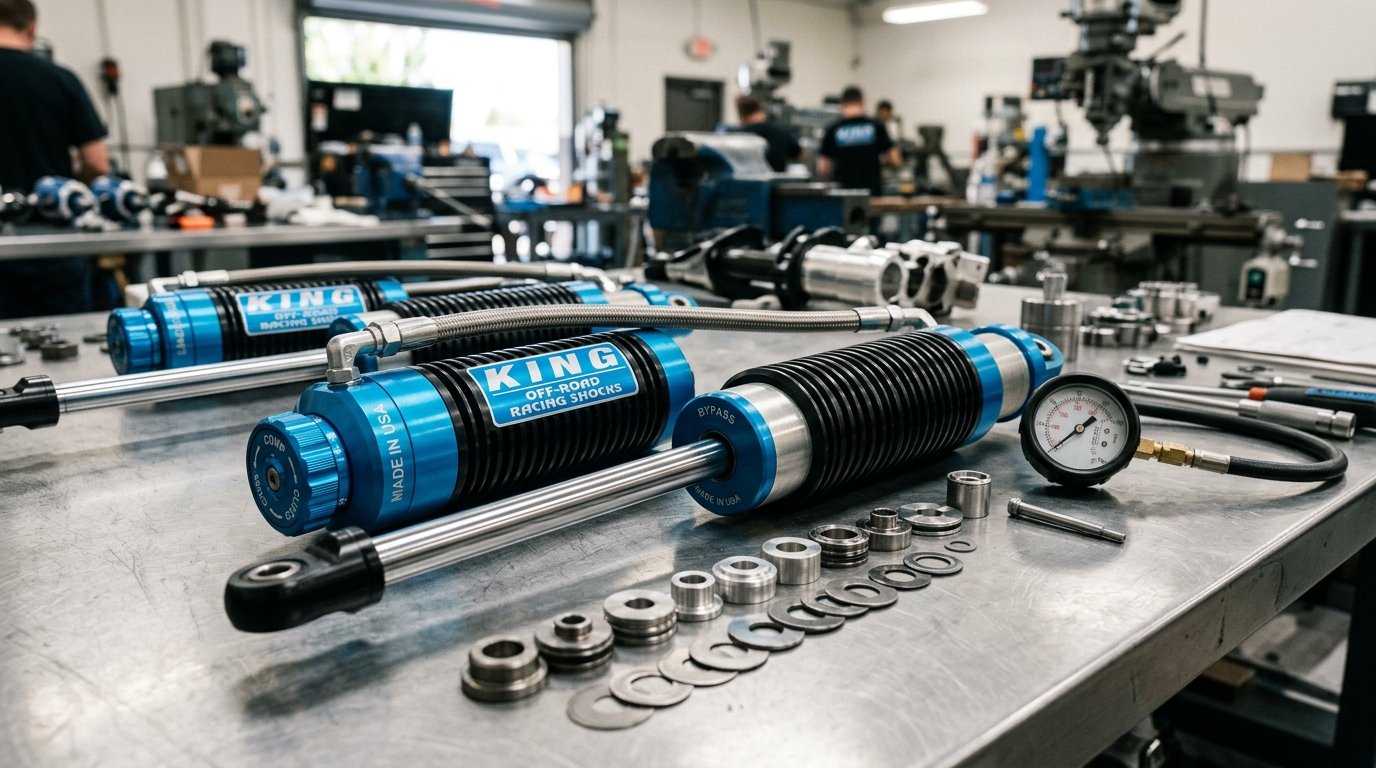
King Shocks Tuning: Compression, Rebound, and Reservoir Placement Explained
How internal shim stacks, high-pressure nitrogen gas, and external clickers work together to give your 4x4 world-class ride control.
Read Article